
I’m Feeling Lucky

Modos de virtualización y apropiación en la pintura post-internet

Autores/as

DOI:

https://doi.org/10.30827/sobre.v10i.28173

Palabras clave:

apropiación, medios digitales, pintura, post-internet, redes sociales

Resumen

El presente artículo se propone ofrecer una tentativa de clasificación dinámica que permita definir y desarrollar lo que implica una práctica pictórica post-internet en la contemporaneidad. Para ello, una primera parte estará dedicada a realizar un breve repaso histórico por la condición post-internet, así como a conceptualizar la práctica como toda aquella pintura que ha sufrido el impacto de las redes y las tecnologías digitales en cualquier ámbito material y visual de su proceso. El resto del artículo estará dedicado a proporcionar una taxonomía de la práctica en base a sus modos apropiar los lenguajes del espacio digital para virtualizarlos en el espacio analógico, proponiendo cuatro categorías principales: una pintura inmediata, una pintura repetitiva, una pintura pantalla y una pintura idiota.

Descargas

Los datos de descargas todavía no están disponibles.

Citas

Barro, D. (2009). Antes de ayer y pasado mañana: o lo que puede ser pintura hoy. MACUF y Artedardo.

Bishop, C. (2018). Black Box, White Cube, Gray Zone: Dance Exhibitions and Audience Attention. The Drama Review, 62(2), 22-42. https://doi.org/10.1162/DRAM_a_00746. DOI: https://doi.org/10.1162/DRAM_a_00746

Bogojev, S. (2019, septiembre 18). In conversation with Robert Nava. Juxtapoz Magazine. https://www.juxtapoz.com/news/painting/in-conversation-with-robert-nava/.

Bourriaud, N. (2004). Estética relacional (2ª ed.). Adriana Hidalgo.

Brimmers, J. (2018, marzo 15). On Rejecting Professionalism: An Interview with Painter David Ostrowski. The Creative Independent. https://thecreativeindependent.com/people/david-ostrowski-on-rejecting-professionalism/.

Buchloh, B. H. D. (1981). Figures of Authority, Ciphers of Regression. October, 16, 39-68. DOI: https://doi.org/10.2307/778374

Buci-Glucksmann, C. (2006). Estética de lo efímero. Arena Libros.

Chartier, R. (2004). Lecturas y lectores “populares” desde el Renacimiento hasta la época clásica. En G. Caballo y R. Chartier (Eds.), Historia de la lectura en el mundo occidental (2ª ed., pp. 469-493). Taurus.

Chartier, R. (2022). Editar y traducir. La movilidad y materialidad de los textos. Gedisa.

Colomina, B. (2010). Privacidad y publicidad. La arquitectura moderna como medio de comunicación de masas. Cendeac.

Connor, M., Dean, A. y Espenschied, D. (Eds.). (2019). The Art Happens Here: Net Art Anthology. Rhizome y The New Museum.

Crimp, D. (1980). The Photographic Activity of Postmodernism. October, 15, 91-101. DOI: https://doi.org/10.2307/778455

Darling, J. (2017). Post-Whatever #usermilitia. En O. Kholeif (Ed.), You are Here: Art After the Internet (pp. 136-140). Cornerhouse.

de Diego, E. (2011). No soy yo. Autobiografía, performance y los nuevos espectadores. Siruela.

Debatty, R. (2008, marzo 28). Interview with Marisa Olson. We Make Money Not Art. https://wemake-money-not-art.com/how_does_one_become_marisa/.

Diers, M. (2002). On the Urgency of Painting or Images Upon Images. En L. Bossé (Ed.), Urgent Painting (pp. 33-44). Paris-Musées.

Doulas, L. (2011, junio). Within Post-Internet Part I. pool (1). https://pooool.info/uncategorized/within-post-internet-part-i/#_ftn1.

Doulas, L. (2011-2012). pool. http://pooool.info/.

Ernst, W. (2017). The Delayed Present: Media-Induced Tempor(e)alities and Techno-Traumatic Irritations of “the Contemporary”. Sternberg Press.

González García, A. (2007). Pintar sin tener ni idea y otros ensayos sobre arte. Lampreave y Millán.

Greenberg, C. (2006). La pintura moderna. En F. Fanés (Ed.), La pintura moderna y otros ensayos (pp. 111-120). Siruela.

Groys, B. (2018). Volverse público. Las transformaciones del arte en el ágora contemporánea (2ª ed.). Caja Negra.

Guardiola, I. (2019). El ojo y la navaja: un ensayo del mundo como interfaz. Arcadia.

Heiser, J. (2015). Numerous Sides of Nothing: On David Ostrowski. En C. Gether, S. Høholt y C. Jalving (Eds.), David Ostrowski: The F Word (pp. 12-24). Arken Museum of Modern Art.

Iáñez Picazo, J. y Padín Fernández, M. (2022). Bucear la herida: paisajes (im)posibles de la imagen en la era postfotográfica. Muga.

Juicebox. (Sin fecha). From Harvest Gold to Millenial Pink: Colors that Defined the Decades. https://juiceboxinteractive.com/blog/color/

Kholeif, O. (2017). The Curator's New Medium. En O. Kholeif (Ed.), You are Here: Art After the Internet (pp. 78-85). Cornerhouse.

Lévy, P. (1998). ¿Qué es lo virtual? Paidós.

Lovink, G. (2019). Tristes por diseño: las redes sociales como ideología. Consonni.

Martín Prada, J. (2018). El ver y las imágenes en el tiempo de Internet. Akal.

McHugh, G. (2011). Post-Internet: Notes on the Internet and Art. Link Editions.

Olson, M. (invierno de 2009). Postinternet: Art After the Internet. Foam Magazine 29, 59-63.

Olson, M. (2010). Lost Not Found: The Circulation of Images in Digital Visual Culture. En C. Cotton y A. Klein (Eds.), Words Without Pictures (pp. 274-284). Aperture.

Parikka, J. (2016). A Slow Contemporary Violence: Damaged Environments of Technological Culture. Sternberg Press.

Raymond, C. (2021). The Selfie, Temporality, and the Contemporary Photography. Routledge. DOI: https://doi.org/10.4324/9780429319044

Reyburn, S. (2014, abril 11). Hot New Artists, Getting Hotter. The New York Times. https://www.nytimes.com/2014/04/14/arts/international/hot-new-artists-getting-hotter.html.

Rimbaud, A. (1959). Una temporada en el infierno (2ª ed.). Edicom.

Robinson, W. (2014, abril 3). Flipping and the Rise of Zombie Formalism. Artspace. https://www.artspace.com/magazine/contributors/see_here/the_rise_of_zombie_formalism-52184.

Sadin, E. (2018). La silicolonización del mundo: la irresistible expansión del liberalismo digital. Caja Negra.

Saltz, J. (2014, junio 17). Zombies on the Walls: Why Does so much New Abstraction Look the Same? Vulture New York. https://www.vulture.com/2014/06/why-new-abstract-paintings-look-the-same.html.

Segade, M. (2013). Jetzeit / L’esquena de l’àngel. Centre d’Art La Panera.

Steyerl, H. (2014). Los condenados de la pantalla. Caja Negra.

Troemel, B. [@bradtroemel]. (2020, mayo 4). Repetition Mindset [Ensayo]. Instagram. https://www.instagram.com/p/B_xllrLBUnU/.

Tucker, M. (1978). Bad Painting. The New Museum of Contemporary Art.

Walker, J. A. (2001). Art in the Age of Mass Media. Pluto Press.

Ward, F. (2012). Undead Painting: Life After Life in the 1980s. En H. Molesworth (Ed.), This Will Have Been: Art, Love and Politics in the 1980s (pp. 50-63). Museum of Contemporary Art y Yale University Press.

Yáñez Tapia, G. (diciembre de 2007). Imagen digital: la “suspensión” de la distancia categorial moderna [o cómo operar desde los Estudios Visuales en la postmodernidad]. Estudios Visuales, 5, 107-123.

Zafra, R. (2018). Ojos y capital (2ª ed.). Consonni

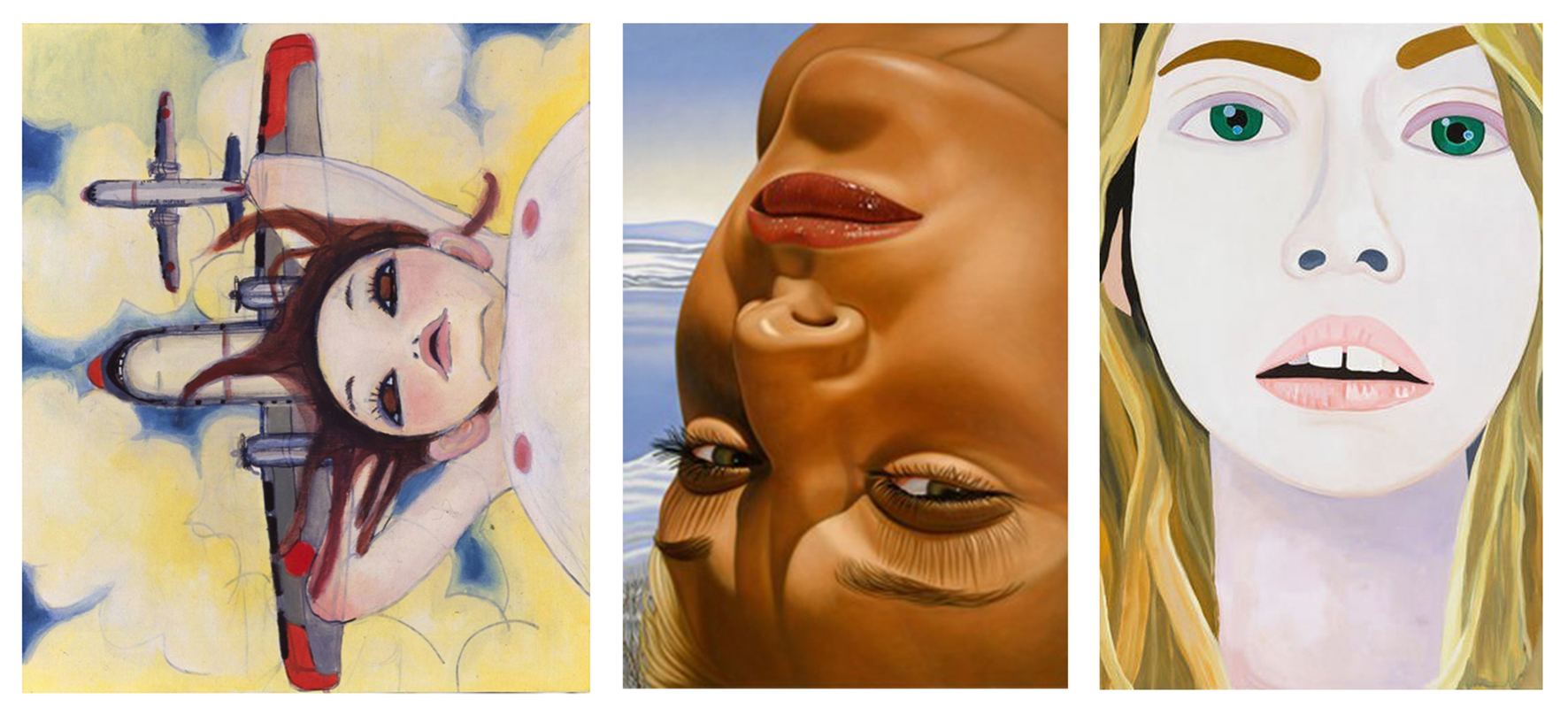
Aya Takano, Fallin’–Manma Air (2000); Richard Phillips, Der Bodensee (2008); Brian Calvin, June (2014)

Descargas

Publicado

2024-01-31

Cómo citar

Iáñez Picazo, J. (2024) «I’m Feeling Lucky: Modos de virtualización y apropiación en la pintura post-internet», SOBRE, 10, pp. 205–217. doi: 10.30827/sobre.v10i.28173.

Número

Sección

Campo