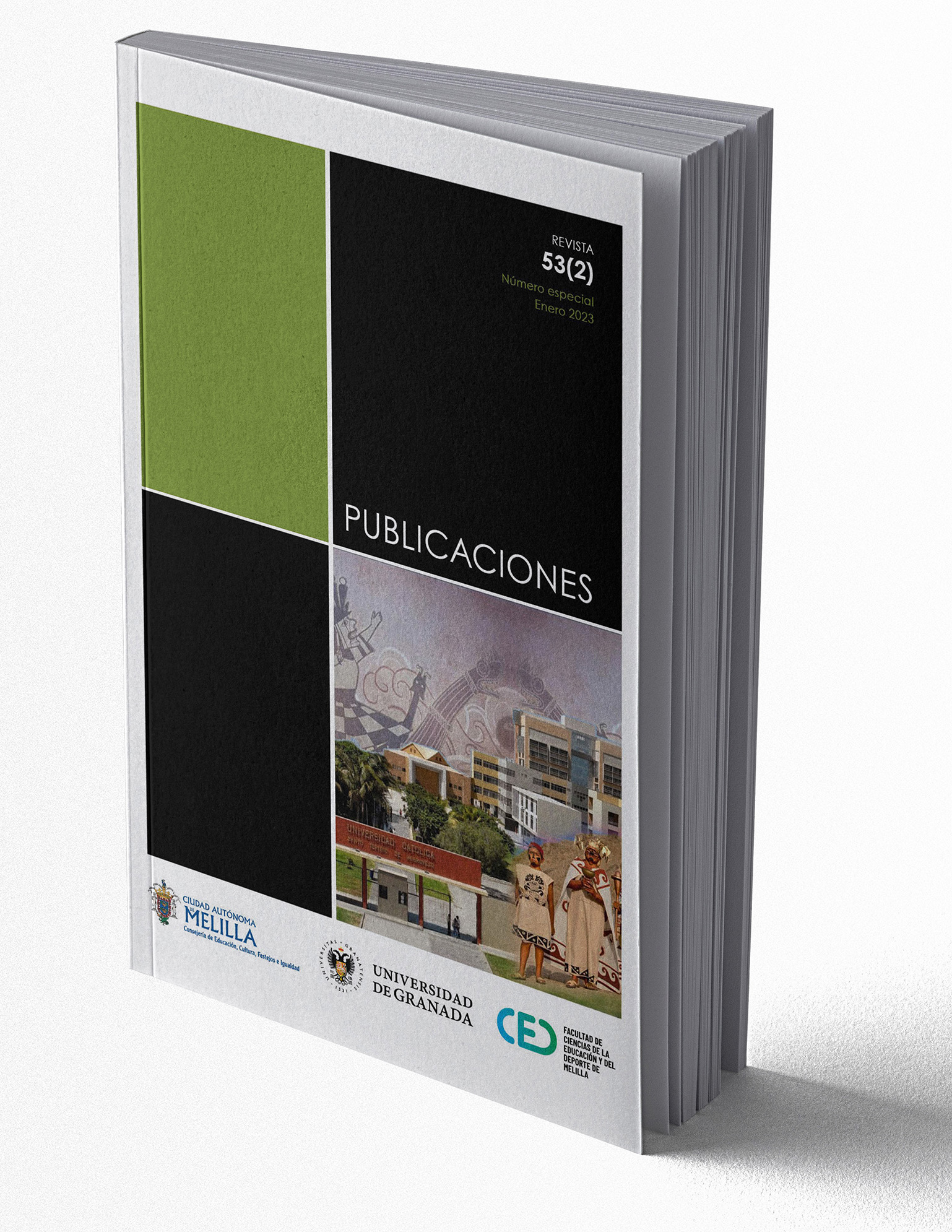
Editorial Note. Publicaciones 53(2)
DOI:
https://doi.org/10.30827/publicaciones.v53i2.26841Abstract
The constant technological and scientific changes in the world, and how fast they are advancing, pose a series of demands and challenges to the university education system, which is increasingly seeking to ensure that students develop their potential in response to such demands and challenges of the 21st century. In this regard, the CISETC (International Congress on Education and Technology in Sciences) provided a scientific and academic platform where the best teaching practices in STEAM (Science, Technology, Engineering, Art, and Mathematics) were exchanged and responded to the demands and challenges of the general education system, which is currently focused on how to make the best use of technology. Furthermore, the results of this important Congress provide many opportunities to develop at schools from different educational levels. The scientific papers taking part in this edition correspond to the special issue of CISETC 2021, held in the city of Chiclayo - Peru, where a variety of research and innovation works in the STEAM fields are addressed, these works are a sample of how educational research is developing in Latin America, as it is consolidating rapidly and undoubtedly has a promising future.
Downloads
Downloads
Published
Issue
Section
License
The authors whose submissions are published in this Journal accept the following terms:
- The copyright is held by the author(s), which will simultaneously be subject to a licence Creative Commons 4.0 BY-NC-SA allowing third parties to share the work provided that the author is cited and granting the Journal the right to first publication.
- The author(s) may enter into any other licence agreements for non-exclusive distribution of versions of the published work (e.g. deposit in an institutional repository or publication in a collective work) provided that the initial publication in this Journal is stated.
- The author/s is/are permitted and recommended to post their work online (e.g. in institutional repositories or on their website) prior to and during the submission process, as it can lead to productive exchanges and increase the number of citations of the published work. (See The effect of open access).